Tuesday, April 10, 2018

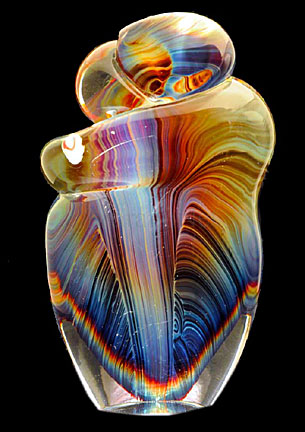
The Colorful Elegance of Murano Glass


QUESTION: Last year to went on vacation to Italy. While there, I visited Venice. One day, I took a boat over to Murano, a group of islands where they make glass. I saw a lot of tacky souvenirs, but then I happened on the studio of one of the glass artists. His work was beautiful. I think I’d like to start collecting Murao glass, but I have no idea where to start. What can you tell me about it? How collectible is it?

ANSWER: While Murano glass has been made for several centuries, collecting those antique pieces may be out of your league. But you could start a collection of pieces from the 1950s or sooner.

Murano glass objects have gone up in price in recent years. Those items made in the 1950s are especially popular because of their reasonable prices. Typically, Murano pieces are low bowls and ashtrays with abstract shapes. Some are rounded or blobbed, kind of like an amoeba. Others have pointed "fingers" in the design which reach outward or up in many directions. A few stand higher, with fingers reaching upward to form a handle for a basket. There are also bud vases. All are have deep, vibrant colors, and all are heavy and have polished smooth bottoms.

Murano is a series of islands linked by bridges in the Veneto, or Venetian Lagoon, less than a mile north of Venice. Today, it has a population of over 5,000 and is famous for its glassmaking. This reputation as a center for glassmaking came about when the Venetian Republic, fearing fire and destruction of the city's mostly wooden buildings, ordered glassmakers to move their foundries to Murano in 1291. The glassmakers of Murano have specialized in fancy glasswares ever since.

They developed or refined many glassmaking technologies, including crystalline glass, smalto or enameled glass, goldstone or golden glass, mullefiori or multicolored filement glass, or milk glass, and imitation gemstones made of glass. Today, the artisans of Murano still use these centuries-old techniques, crafting everything from contemporary art glass and glass figurines to Murano glass chandeliers, as well as tourist souvenirs..

Murano's glassmakers eventually became the island’s most prominent citizens. By the 14th century, glassmakers could wear swords, enjoyed immunity from prosecution by the Venetian state, and had permission for their daughters to marry into Venice’s most affluent families. But there was a downside. Glassmakers weren’t allowed to leave the Republic. Anyone caught exporting professional glasmaking secrets was put to death. Many craftsmen took this risk and set up glass furnaces in surrounding cities and as far afield as England and the Netherlands. By the end of the 16th century, three thousand of Murano island's seven thousand inhabitants were involved in some way in the glassmaking industry.

The late 19th century saw a resurgence in the art of glassmaking on Murano. By the turn of the 20th century, they only produced special pieces for La Biennale di Venezia, the Venice Biennale, an international art exhibition that began in 1895.

Following World War I, the glassmaking factories began normal production of non-traditional pieces. By the 1930s, they began producing pieces in the Art Deco style. This continued until the Biennale of 1942, at which the Murano glassmakers outdid themselves by exhibiting pieces in exciting shapes and colors that brought a lift to war-weary Venice.

Some of Murano's historical glass factories, including De Biasi, Gabbiani, Venini, Salviati, Barovier & Toso, Pauly, Berengo Studio, Seguso, Formia International, Murno Gladst, Simone Cenedese, Alessandro Mandruzzato, Vetreria Ducale, Estevan Rossetto 1950, remain well known brands today,. The oldest glass factory is Antica Vetreria Fratelli Toso, founded in 1854.

Overall, the Murano glass industry has been shrinking as demand has waned. Imitation works from Asia and Eastern Europe have stolen an estimated 40-45 percent of the market for Murano glass, and public tastes have changed while the designs in Murano have largely stayed the same. The difficult and low-paying nature of the work has decreased  the number of professional glassmakers in Murano from about 6000 in 1990 to fewer than 1000 today.

Today, about 50 companies use the Artistic Glass Murano® trademark of origin. Regionale di Veneto Law Numero.70, passed in 1994, introduced this trademark and continues to regulate it. While glass factories on Murano aren’t required to apply for the trademark and many choose not to, works that bear it have their authenticity guaranteed.

One of the main characteristics of Murano glass is its bubble-free quality. By adding fluxes and stabilizers such as soda and lime to silica sand, glassmakers can melt the glass at a lower temperature, making the glass homogeneous and bubble free. While basic Murano glass is colorless, the addition of small amounts of minerals, oxides, and chemical derivatives to the base composition of the glass powder gives it its brilliant colors.

Today, the island of Murano is synonymous with glass. Everything imaginable is made from Murano glass: wine goblets, vases, candlestick holders, miniature animals, paperweights, chandeliers, lampshades, dinner services, tiny pieces of glass candy, beads, and every kind of jewelry you can imagine. There’s tremendous variety in quality, price, and style. When it’s quickly turned out for a cheap profit among the tourist trade, it can look hideous. When it’s well done, Murano glass is exquisitely beautiful.

Learn more about Venice by reading "Venice Sets the Stage for Magical Moments" in the Travel Article section of my Web site.

To read more articles on antiques, please visit the Antiques Article section of my site.  And to stay up to the minute on antiques and collectibles, please join the other 18,000 readers by following my free online magazine, #TheAntiquesAlmanac. Learn more about the Victorians in the Winter 2018 Edition, "All Things Victorian," online now.  


lattimo


Thursday, April 5, 2018

Idealized Scenes from Life


QUESTION: I’ve grown to love the scenes on English transferware. I’ve got a small collection that I add to from time to time. How did the makers of these wares know what sort of scenes to use to decorate their wares? Were they trying to illustrate stories or myths? Nearly all of the scenes on my pieces are rural. Is there a reason for that?

ANSWER:
These are all good questions. The Victorians had a method to their madness, as the old saying goes. As it turns out, the scenes on your Staffordshire transferware pieces were a direct result of historic events and the lifestyles that people led at the time.

During the 19th century, Victorians began exploring the world around them.  Technological advances enabled them to make more ambitious voyages of discovery. And as they journeyed farther from home, their views of the natural world changed. This changing perspective reflected in the decorations of 19th-century ceramics ranging from early historical and romantic Staffordshire transfer printed wares to late 19th-century majolica. Idealized wilderness and pastoral scenes could be found on all types of vessels and dishes.

By this time Americans had begun to develop a different view of the land. To the Puritans, wilderness had been considered a land of devils and demons, a domain to be feared. But the Victorians reveled in the beauty of nature.

The American frontier had been pushed westward. Following this trend, Staffordshire potteries began producing transfer printed landscapes illustrating the popular, romantic ideal of nature. Favorite spots such as Niagara Falls and Newport, Rhode Island, began to accommodate sightseers. And the Romantic Movement of the first half of the 19th century influenced the images on ceramics, from country scenes to floral motifs.

The Victorians developed a passion for natural history. They chronicled what they found in journals--the world's flora, fauna, and sea life—and created museums for their discoveries, erecting home conservatories, and published illustrated volumes on the natural sciences. Staffordshire artists thumbed through botany texts and visited botanical gardens and zoos, sketch-pads in hand, for inspiration. Some of this fascination may be seen in the border designs created by several of the potters of  Staffordshire wares and the floral motifs seen in Flow Blue.

Another reason for the popularity of a romanticized image of woodlands, mountains, sandy shores, and even idyllically situated American towns may be traced to the actual dirtiness and difficulty of life in both rural and urban landscapes.

Scenes on dinnerware were pristine by comparison. Several of the city views do show cattle and sheep in the foreground, but the cleanliness even of those scenes provided at least temporary escape from the dirtiness of the real world.

Another result of the Victorians’ fascination with nature, plus the Victorians’ obsession with death, was the Garden Cemetery Movement, born in Boston. In 1832, a group created the Auburn Cemetery, a large rural cemetery in rolling countryside with plenty of room for adequate burials. The site was also far enough away from the city to make grave robbery difficult. They adorned the  garden cemetery landscape with sculptures and artful groupings of trees and flowers to combine a necessity for more burial land with a desire to revel in nature.

The sylvan burial plots brought families to the large, rural cemeteries on picnics. Young couples took long strolls and individuals wandered among sepulchers and statuary to seek out moral lessons and inspiration. In essence, the new cemeteries became the first American public parks—places to commune both with nature and the dearly departed.

This combination of movements explains several unusual historical Staffordshire prints. Neither George Washington nor Benjamin Franklin would have ever expected anyone to spend time ruminating over his grave. Yet Enoch Wood & Son in both the illustrations of “Franklin's Tomb” and `Washington's Tomb” depict General Lafayette reclining by urn-capped tombs drawing inspiration from the resting places of his departed allies. Edward and George Phillips, two other noted artists of the time, show a young couple gazing at a tomb in an open glade in their print “Franklin.” This example appeared on a handless tea cup. Enoch Wood & Sons produced the most unusual print and the one that illustrates romantic death, titled “Washington Standing by His Own Tomb With a Scroll in His Hand.”

So the illustrations on pieces of Staffordshire aren’t random but related to the everyday lives of the people who used those dishes and other ceramic vessels.

Learn more about the Victorian obsession with death by reading "When Death Came A-Calling" in The Antiques Almanac.


Monday, March 26, 2018

A Clock for Everyone's Mantel


QUESTION: I fix up old houses. While cleaning up a house to resell recently, I discovered a heavy clock with pillars on the front that looks as if it had seen better days. At first I was going to toss it in the trash, but when I told my wife, she said to bring it home. When she saw it, she gasped, for it looked like one her grandfather had when she was a child. She loved hearing it chime when she went to visit. The clock needs some restoration, but generally the case is sound. I took it to a clockmaker friend of mine who told me that he could probably get it running and would restore it for several hundred dollars. I’d like to know what kind of clock this is, who made it, and how old it is. Also, would it be worth restoring or should I just look for another one for my wife?

ANSWER: From the photograph you sent, it looks like you have an Ansonia cast-iron clock from about 1904. The company, based first in Derby, Connecticut, then in New York, produced thousands of clocks, but their cast-iron models were some of their best sellers.

The Ansonia Clock Company was one of the major 19th century American clock manufacturers. It produced thousands of clocks between 1850, its year of incorporation, and 1929, the year the company went into receivership and sold its remaining assets to   the Amtorg Trading Corporation in Soviet Russia.

In 1850, Anson Greene Phelps formed the Ansonia Clock Company as a subsidiary of the Ansonia Brass Company with two noted Bristol, Connecticut, clockmakers, Theodore Terry and Franklin C. Andrews. Phelps had been operating a brass rolling mill, the Phelps, Dodge, & Company, which he formed with two of his son-in-laws. To help build up his brass business, Phelps decided to get into the clockmaking business as a way to expand the market for his brass products. It was a shrewd business move, for it allowed him to profit from the manufacture of a clock’s raw components and the finished product as well.

Terry and Andrews thought it was a good business decision for them as well, giving them ready access to large quantities of brass for use in clock movements. They agreed to sell Phelps a 50 percent interest in their clockmaking business in exchange for cheaper brass clock parts and moved their entire operation to Derby, Connecticut— a portion of which was later named Ansonia after Anson Phelps—where Phelps had his brass mill.

By 1853, the firm had begun to produce cast-iron clocks to meet the needs of middle class families for clocks that looked elegant but were affordable. That same year, Ansonia exhibited their cast iron cased clocks, painted and decorated with mother-of-pearl, at the New York World's Fair in Bryant Park. Only two other American clock companies exhibited at the fair, which opened on July 4, 1853—the Jerome Manufacturing Company of New Haven, Connecticut, and the Litchfield Manufacturing Company of Litchfield, Connecticut, known for its papier-mache clock cases. (Learn more about papier-mache products by reading “Beauty and Strength from Paper” in The Antiques Almanac). Unfortunately, Phelps died a rich man a month after the Fair closed.

Ansonia created their cast-iron clocks to imitate elegant ones being made in France. Their clocks, however, because they made them of cast-iron, were less costly to produce, thus less expensive to buy, making them affordable to middle class homeowners. The paper dial used on this type of clock gave the impression of more expensive enamel ones very convincingly. While some bases were left sold black, others had the look of faux marble, simulating the French ones. Ormulu figures and mounts, on those clocks that had them, had a Japanese Bronze finish. The clocks had an eight-day movement, meaning they only had to be wound every eight days.

An antique cast iron mantle clock with gold gilt accents, manufactured by the Ansonia Clock Company of New York, circa 1904. This elegant mantle clock features a frame inspired by Greek architecture with a top cornice that has a gold bow and ribbon motif in the middle and two reeded columns on each side of the clock face, also with gold gilt details to the top and bottom. The central clock face is white with black roman numerals and hands, which is marked with the maker’s mark near the bottom and is then surrounded by a gilded border with an egg and dart design. The entire clock sits on a solid rectangular base.


This clock is what Ansonia named the “Boston Extra.” Made in 1904, it was a mantel clock with a visible escape movement, enabling the owner to watch the clock ticking, and chimes on the hour and the half hour. It features a pie-crust bezel, four green, full rounded pillars on the front and is very heavy, weighing in at 24 pounds. In 1904, the Boston Extra sold for $11.15 to $14.25. Today, one of these in good condition can sell for over $600. So, yes, it would be good to have it restored.

Learn more about clocks by reading #TheAntiquesAlmanac's Glossary of Antique Clock Styles.

 To read more articles on antiques, please visit my Web site.  And to stay up to the minute on antiques and collectibles, please join the other 18,000 readers by following my free online magazine, #TheAntiquesAlmanac. Learn more about the Victorians in the Winter 2018 Edition, "All Things Victorian," online now. 

Wednesday, March 21, 2018

Who Will be Mother?


QUESTION: I love to drink tea. In fact, I began drinking it when I was about 10 years old. I love the aroma and the steam that comes from the cup as I put it to my lips. Of course, as a tea afficionado, I always brew loose tea. But what I can’t stand are the bits of leaves that always seem to end up in the bottom of my cup. A tea strainer is a necessity if brewing tea from leaves. I always had a simple one that fit over the top of my cup and let me pour the tea through it, collecting the dregs in the strainer as it went. Last year, I attended an antique show and treated myself to a beautiful sterling silver tea strainer. I love it. So much so that now I’d like to begin collecting them.                        

ANSWER: People have used tea strainers for centuries. During the 18th and 19th century, when having tea was an important social event, silversmiths made tea strainers for wealthy tea drinkers. Since no one liked fishing loose tea leaves out of their teacup, strainers became a popular tea accessory. Tea strainers enabled hostesses to filter the leaves out while pouring tea in each person’s cup.

After it’s introduction to Europe, tea drinking began to inspire elaborate serving conditions. Unlike in China or Japan where tea drinking had a religious significance, tea drinking rituals in the West emphasized tea’s exotic origins and the server's wealth. Over time, an assortment of locked storage containers, special serving vessels, measuring spoons and other implements became part of any tea service. And, unlike the Chinese, who simply dumped tea into the pot and poured carefully, Europeans devised strainers to remove not only the leaves but also stems, grit, and other debris often found floating in the tea.
                   
By the 17th century, strainer spoons to remove the "motes" or tea debris with perforated bowls and pointed ends for clearing teapot spouts became common.

Toward the end of the 18th century, the silver cup strainer, adapted from wine strainers and from larger two-handled silver punch strainers used to extract lemon and orange juice used in other beverages, appeared. For tea, the cup strainer had one or two handles of silver or other material and fit over the cup to filter tea as it was poured.

By the 19th century silver craftsmen experimented with various designs to secure the cup strainers to the teacup. Some had two handles that straddled the cup while others were made with clasps to clip onto the edge. They also developed stands to support the strainer when it wasn’t in use and to catch the drippings.

Teapot spout strainers, featuring a pierced basket or bucket-shaped strainer with long pins to be inserted in the spout, were another tea trapping device developed in the late 18th century. As a person poured the tea, it flowed through the strainer and into the cup. Although they dripped tea on tablecloths, their dainty appearance and intricate piercings made them a highly desirable tea accessory. Spout strainers were more fashionable in Europe than in America and silver manufacturers created many novelty forms such as helmets, buckets and shells.

In the mid 19th century a new development in brewing came in the form of the tea infuser, also known as a tea ball. Tea balls are perforated, spherical containers made in two parts and connected either by a hinge and clasp or by screw threading.

Tea balls not only trapped tea leaves, but contained them within the pot for the brewing. Tea balls weren’t made in America until after 1880, but they quickly became the most popular tea strainer form used in America. More than 60 prominent American companies, such.as Gorham, produced them in quantity and in whimsical shapes, such as grapes, walnuts, lanterns, faces, teapots, shells, cauldrons, fish, Earth, and the Liberty Bell.

There have also been square tea balls, both an oxymoron and a rarity. A particular favorite is a curled-up dormouse, recalling the unfortunate creature dunked into the teapot during the Mad Hatter's tea party in the children's classic, Alice in Wonderland.

The last form of tea strainer to be invented appeared in England in the 1890's and quickly found its way to the United States. The stick infuser or spoon infuser, consists of a covered spoon-like bowl perforated on both lid and bowl. Like tea balls, tea drinkers filled the stick infusers with tea leaves, but unlike the tea balls, people used them to brew one or two cups of tea. Like the tea ball, the stick infuser gained popularity in the United States. Again. manufacturers presented numerous design variations, replacing the spoon bowl with a ball or heart shape and using different handle forms made of bone, porcelain  and wood. Some stick infusers with upright handles resemble pipes, while others resemble a pair of tongs or an egg on a stick.

The development of the tea bag signaled the end of mass production of silver tea strainers. Today, the tea strainers of the 18th through the early 20th century stand as valuable reminders of the importance of aesthetic pleasure in a social ritual—the serving of tea.

Learn more about the tea experience by reading "The Origin of Afternoon Tea" in #TheAntiquesAlmanac and also about sterling silver tea sets in my Google+ Collection, Antiques and More.

To read more articles on antiques, please visit my Web site.  And to stay up to the minute on antiques and collectibles, please join the other 18,000 readers by following my free online magazine, #TheAntiquesAlmanac. Learn more about the Victorians in the Winter 2018 Edition, "All Things Victorian," online now.