Showing posts with label antique. Show all posts

Monday, August 3, 2026

Forerunners to the Modern Bathroom


QUESTION: Several years ago, I purchased an antique washstand set at a local antique show. The pieces are marked “K.T.A.K. China,” but I’ve been unable to find the pottery that made it. I believe the set dates to sometime in the mid to late 19th century. Can you tell me who made this set and also about the origins of these sets?

ANSWER: Your washstand was definitely made between 1850 and 1860 by the Knowles, Taylor, and Knowles China Company of East Liverpool, Ohio. Isaac Watts Knowles and Isaac Harvey, who operated a store boat along the Ohio River selling pottery, established a pottery in 1854. Knowles bought out Harvey in 1856. He formed Knowles, Taylor, and Knowles in 1870 when his son-in-law John N. Taylor and his son Homer S. Knowles joined the firm. But the company didn’t become incorporated until 1891, at which time it employed 700 workers who operated 35 kilns.

Before modern plumbing, people washed themselves daily at washstands, using washstand sets. Typically, each bedroom contained a washstand cabinets or two-tiered table on which a person could set a wash bowl on the top and a water pitcher on the bottom. Commode washstands had a chamber pot stored in a small cabinet in the bottom.

Most early washstands, usually made of oak, had a round cut out in the top shelf in which a large ceramic basin rested. During the second half of the 19th century, manufacturers produced washstands with flat tops and by the 1880s, many came with white marble tops. 

Pottery companies around the world began producing wash bowls and pitcher sets around the last quarter of the 18th century. But the washstand sets, at least the ones seen in antique shops and shows, date from the early 19th to the early 20th century. Typically, these sets consisted of seven items—a large bowl or basin, a large pitcher, a small pitcher, a chamber pot with a lid, a cup with a handle for rinsing after brushing teeth, a cup without a handle to hold tooth brushes and straight razors, and a covered soap dish with ceramic insert to keep soap from getting waterlogged. Some sets also included a large covered container for waste water and a dish to hold combs or hair brushes. 

A person used the warm clean water in the larger pitcher to wash their face, hands, and even brush their teeth. The poured the used water from the basin into a bucket or large ceramic jar.

Potteries produced washstand sets in various colors, materials, and styles,  from plain white ironstone to decorative hand-painted sets.

Identifying the marking on an antique wash bowl and pitcher can help discover its  origin, manufacturer, and value. Potteries inscribed and embossed the markings on their pieces during the production process. So any manufacturer’s mark applied to a set is likely to still be visible.

Should a washstand set be devoid of a manufacturer’s mark, it’s possible to date it by the shape of its handles. Scrolled or high-arching handles with thumb spurs indicate mid-19th century Victorian styles, dating from to the 1840-1860s, while angular, bamboo-style handles indicate the Aesthetic Movement, dating to the 1870s and 1880s. A handle featuring organic, flowing “whiplash” curves that melt into the body of the cup or pitcher suggests the Art Nouveau style, dating from 1890 to 1910. And sharp, geometric angles, circles, and stepped designs indicate the Art Deco style, dating from 1925 to the 1935.

But before analyzing the handle’s shape, it’s important to see how it’s attached. Early 19th-century pieces generally had “applied” handles. The potter would hand-roll a strip of clay and attach it to the body of the cup or pitcher before firing. Applied handles with a small depression or “thumb-print” at the base of the handle suggests an earlier date, often pre-1860.

Conversely, if the handle has a visible seam line running down the center that matches the seam on the pitcher body, it had been molded as one piece. This mass-production technique became standard later in the Victorian era.

Handles produced from the 1850s to the 1870s were mostly in the Rococo or Gothic Revival styles. Potteries produced pitcher handles with elaborate scrollwork and often added a “thumb spur” or thumb rest at the top of the handle’s curve.

However, if a handle imitates a vine, branch, or stag’s antler, then it dates most likely to between the 1850s and 1860s. Segmented bamboo handles appear on pitchers from the 1870s to the 1890s. And rope-shaped handles have been found on pitchers made by potteries along the eastern seaboard.

Since these washstand sets were ceramic, they were open to breakage, even though most were made with thicker walls and handles, making finding a complete set more of a challenge.

For common pieces, broken handles and cracks can reduce the value of an entire set. However, even partial sets or just wash bowls and pitchers are often sold separately.

An antique washbowl and pitcher with matching patterns or in a set is more valuable than separate pieces paired together. This is because finding an antique matching set in recent times is quite tasking and almost impossible. Also, sets made by well known potteries are usually worth more.

To read more articles on antiques, please visit the Antiques Articles section of my Web site.  And to stay up to the minute on antiques and collectibles, please join the over 50,000 readers by following my free online magazine, #TheAntiquesAlmanac. Learn more about "Victorian America" in the 2026 Summer Edition, online now. And to read daily posts about unique objects from the past and their histories, like the #Antiques and More Collection on Facebook.


Saturday, July 6, 2024

What's All the Fanfare?


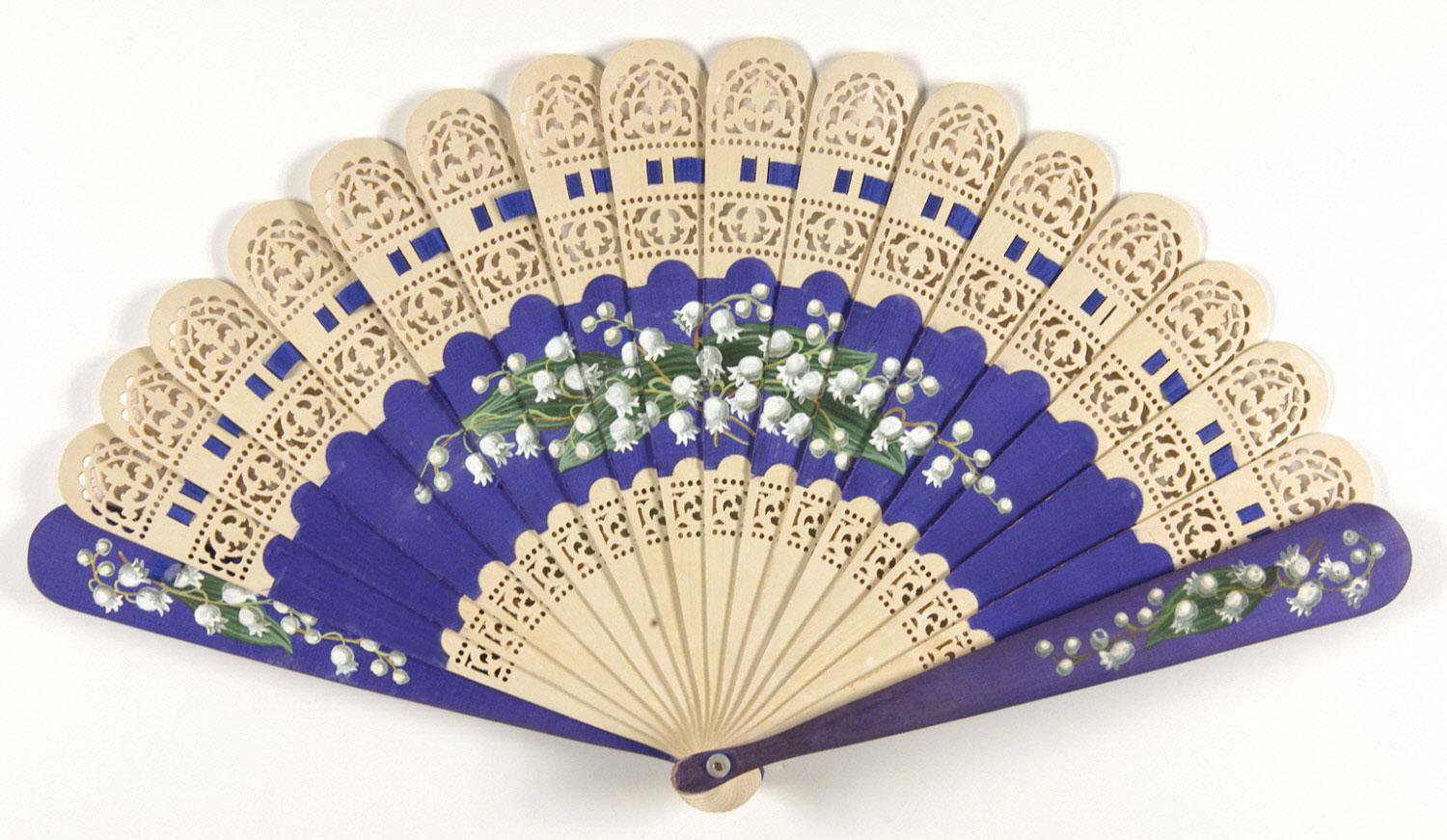
QUESTION: I was digging around in my mother’s attic the other day and discovered a flat box containing two very beautiful fans. I imagine these must have belonged to her mother or grandmother. What can you tell me about them? Do they have any value?

ANSWER: Fans have been around for a long time. As a piece of functional art, they go back as far as ancient Egypt. 

The Egyptians saw them as sacred instruments used in religious ceremonies. They also became a symbol of royal power. But it was the Chinese who evolved the fan into a complex, decorated instrument. The Japanese took the fan one step further and produced a folding version, supposedly based on the folding wings of a bat. When Marco Polo returned to Venice, he brought with him fans made of vellum, paper, swan skin with blades of gold, silver, and inlaid mother-of-pearl.

The original purpose of hand fans was to create a breeze, but they had many other uses. They could be used as protection against rain, as a tray for offering or receiving refreshments, and to hide bad teeth. European women would use fans to hide their faces during mass.

By the 18th century, the folding fan had come into its own in Paris. Delicately hand-painted floral motifs, on a structure of decorative sticks, came into common use. In fact, any wealthy lady worth her salt had to have fans as accessories to her wardrobe.

These wealthy women developed a whole language of salutations and signals around their fans. For instance, carrying a fan in the left hand signified "desirous of acquaintance" while allowing it to rest on the right cheek meant "yes" and on the left "no." Drawing a fan across the forehead meant "We are watched" and drawing a fan across the eyes meant "I am sorry." Opening a fan wide meant "wait for me."

Dropping a fan meant "We could be friends." If a lady fluttered her fan, it meant “I am married.” But if she placed the handle of her fan to her lips, it meant "kiss me."  An open fan held in the right hand in front of the face—the ultimate form of seduction— meant "follow me"


The blades of these delicate instruments could be of carved ivory or tortoise shell inlaid with precious inlaid metals and elaborate jewels. Less expensive fan sticks were usually of sandalwood or fruitwood. These rococo fans were the finest ever made, and many fo the designs took the form of stylized art.

By the latter part of the 18th century, fans had gained popularity as a fashion accessory in the upper circles of American society. While fan makers imported finer sticks, they made their own wooden ones.

The earliest fans made in any large quantity in the United States were paper souvenir fans depicting historical scenes. as well as current events. Lithographers portrayed views of New York's Crystal Palace, 1853, the Philadelphia Centennial in 1876, printed in black on a cream background, and the World's Columbian Exposition in 1893.

By the late 19th century, fans displayed images of nearly every product. Every department store and every manufacturer advertised on fans, including such products as coffee, milk, bread, carpet sweepers, restaurants, cafes, theaters, sewing machines, etc. 

Before the advent of air-conditioning, funeral parlors gave out fans t mourners. These were as much to keep mourners cooler in warm weather as they were to wave the stink of the corpse away. These mourning fans became a social necessity. Manufacturers often fashioned them in black materials to coincide with the black clothing worn during recognized periods of mourning. Of course, it didn't hurt to print the name and address of the mortician on the guards of a cheap wood fan.

Fans are still relatively inexpensive—except the jewel-encrusted ones—so they’re ideal to collect, especially for the novice collector. Many sell for $5-$20 online. Some of the most sought after fans came from the E.S. Hunt Company, later called the Allen Fan Company. In 1868, Hunt patented the process by which he assembled the fan sticks and the fan leaf in one step. This included folding or creasing and gluing the leaf to the fan sticks at the same time under pressure. This was America's first fan to appear and unfortunately folded, like its fans, in1910.  

Serious fan collectors often prize the simpler fans with printed leaves and plain sticks and guards. Many of these simpler folding fans provide a glimpse of particular times in history. Some once served as records of special occasions, such as births and marriages. Often fans celebrated military and naval victories. And some did the same for national holidays. Collectors find such a quantity of fans that many specialize in one particular subject, such as advertising fans. Unlike many other delicate antiques and collectibles, folding fans have survived for decades and often centuries in superb condition. 

To read more articles on antiques, please visit the Antiques Articles section of my Web site.  And to stay up to the minute on antiques and collectibles, please join the over 30,000 readers by following my free online magazine, #TheAntiquesAlmanac. Learn more about "The Art Deco World" in the 2024 Spring Edition, online now. And to read daily posts about unique objects from the past and their histories, like the #Antiques and More Collection on Facebook.


Monday, April 8, 2024

Enriching the Human Spirit Through Pottery


QUESTION: A few years ago, I found several Pewabic ceramic tiles while browsing a local thrift shop. I’m not sure how old they are, but I suspect they’re newer ones, purchased as souvenirs of a visit to the Pewabic Pottery in Detroit. Since the tiles were very attractive, I bought them. However, I don’t know anything about Pewabic tiles. Recently, a friend told me they were by Pewabic. Can you please tell me more about the company? I’d like to buy more of these tiles and possibly start a collection.

ANSWER: Pewabic ceramic tiles have been a popular collectible for many years and are relatively easy to find. The pottery is still producing them, including special ceramic Christmas tree ornaments. 

In 1903, Mary Chase Perry Stratton, an artist and educator, and Horace J. Caulkins, a dental supplier and kiln manufacturer founded Pewabic Pottery in Detroit, Michigan, the same year that Henry Ford established his motor company in the city. Caulkins was considered a high-heat and kiln specialist, and developed the "Revelation kiln". Mary Chase Stratton was "the artistic and marketing force." The collaboration of the two and their blend of art and technology gave the pottery its distinctive qualities as Detroit's contribution to the International Arts and Crafts movement and exemplified the American  Craftsman Style. The pottery became a leader in the Arts & Crafts Movement for its handcrafted pottery and ceramic tiles.

The word Pewabic is derived from the Ojibwa (or Chippewa) word "wabic", which means metal, or "bewabic", which means iron or steel, and specifically referring to the "Pewabic" Upper Peninsula copper mine where Stratton walked with her father. Her workshop was an integral part of America’s Arts and Crafts movement, a backlash against mechanization that began in the late 19th century. In it she fashioned handmade, delicate wares, and was much like Henry Ford’s factory with its assembly-line production. 

Challenged by a friend to replicate a piece of shimmering Babylonian earthenware, Stratton decided to fire her pieces three times, adding a spray of kerosene for the final blast. The oil burst into flames, combusting with the metal oxides in the glaze to create a swirl of metallic colors. By 1909 she had perfected the iridescent glaze and the process of “fuming” that became the studio’s trademark.

The pottery started out in a carriage house in Detroit’s Brush Park neighborhood (pictured). Quickly outgrowing this “Stable Studio,” renowned architect William Buck Stratton was hired to design the pottery studio on Detroit's East Side, which is still in use today. Production moved into this building in 1907.

Demand for Pewabic grew thanks to our stunning iridescent glazes and inspiring architectural tile installations throughout southeast Michigan and across the country. Generations have been enriched by the Pewabic art and tile adorning homes, schools, churches, and public institutions, cementing Pewabic into the rich cultural fabric of Detroit.

Under Mary Stratton's artistic leadership, Pewabic Pottery employees created lamps, vessels, and architectural tiles. Architectural pieces have been a staple in Pewabic's history. They were known for their iridescent (like an oil slick with an incredible translucent quality and a phantasmagoric depth of color) glazes. Architectural tiles were used in churches, concert halls, fountains, libraries, museums, schools and public buildings. The studio's work graces numerous edifices throughout Michigan and the rest of the United States. Noteworthy examples include Herzstein Hall at Rice University in Houston, Texas, and the Shedd Aquarium in Chicago. Illinois. 

Stratton  oversaw operation of the pottery until her death at the age of 94. She gifted the pottery to Michigan State University in 1965 which used it for its ceramics education program. 

Pewabic tiles have long been in great demand in Detroit and southeastern Michigan for  use in buildings, and they can be found in many of the area's finest structures. 

To read more articles on antiques, please visit the Antiques Articles section of my Web site.  And to stay up to the minute on antiques and collectibles, please join the over 30,000 readers by following my free online magazine, #TheAntiquesAlmanac. Learn more about "The  Vernacular Style" in the 2024 Winter Edition, online now. And to read daily posts about unique objects from the past and their histories, like the #Antiques and More Collection on Facebook.


Wednesday, June 21, 2023

Horn a Plenty


QUESTION: I’ve always been fascinated by antique items made of horn. I see them in cases at antique shows all the time. I’ve even purchased a hair comb or two and a walking stick with a horn handle. But I have no idea how these items were produced. I assume most of them were made in the 19th century, but I’m only guessing. Can you give me some insight into the production of products from cow’s horn.

ANSWER: Horn has long been used to make various utilitarian objects. Ancient people blew through it to call meetings and such. Other horns held gun powder for muskets. And ornate hair combs made of horn were all the rage in Victorian times.

Long before synthetic materials like Celluloid, Bakelite,  and Lucite came on the scene,  Mother Nature provided an interesting assortment of moldable organic materials. These unique substances from plants and animals are known as "natural plastics."

Thermoplastics are materials that are made pliable by the application of heat, then molded with pressure or by casting in a cold mold. Additional applications of heat will subsequently re-soften thermoplastics and distort the original molded shape of an object. Though many modern thermoplastics are recyclable, antique thermoplastics can be permanently damaged by heat. Testing methods, such as exposure to hot water and the ever-popular hot pin test, can ruin valuable antique objects that are very often irreplaceable. So caution should be taken when trying to identify the materials from which some antique molded items are made.

Collectors seek objects fashioned from natural thermoplastic materials like cow horn in the 18th and 19th centuries. Over time, people used horn for a .variety of useful and ornamental applications. It required persistence and hard work to understand its unique properties. Through trial and error, ingenuity and luck, horn smiths developed successful fabricating techniques for working with horn.

Horn is a form of a protein called keratin, the same type of material as in fish scales, bird feathers, human hair and fingernails. Tiny compressed hair-like fibers, which can be seen with a magnifying glass, make up the structure of ' horn. Because of its unique protein formation, horn frays easily and has a tendency to split and crack during fabrication, making it difficult to work with. 

Horn smiths harvested, cleaned and fabricated horn into a variety of useful and ornamental objects such as dressing combs, hair ornaments, buttons, jewelry, decorative inlaid frames, trinket and snuffboxes. Because of Its beautiful pale translucent quality, they used horn extensively during the Edwardian Era for producing Art Nouveau accessories that depicted the dragon fly motif. 

Horn was a plentiful by-product of the meat and leather industries. It had been used for centuries n its raw state to make objects like powder horns and for fashioning common utilitarian items such as serving spoons and shoehorns. Oxen, steer and cow horn ranged in color from pale cream to light mottled gray. Buffalo horn, obtained from India, Thailand, and China, was dark brown. Domestic cattle horn vas plentiful and ranged in color tones from pale grayish green to streaked dark brown.

Manufacturers used raw cattle horn to make pressed rattans, umbrella and utensil handles, jewelry items and dressing combs. But Before these finished products could reach consumers, they had to first be fabricated. This process actually began with the meat industry.

Slaughterhouses had a surplus of raw cattle horn, which they stockpiled into various sizes and colors. This they sold cheaply to manufacturing companies or merchants who were in the business of applying horn to fabricators. A representative from the fabricating company would carefully select horn for specialty items like ornamental hair combs. Some representatives traveled the world searching for fine horn. When color wasn’t a consideration, the horn went for making common utilitarian objects like utensil handles or buttons.

After sorting, fabricators prepared the raw horn for the first step in processing. Workers trimmed the ends away by means of sawing two cross cuts—the first called the "head" or "rootº cut and the second the "screw" or "tip" cut. They then gathered the tips  to make utensil handles and buttons and used the ragged edges of the head cut to produce fertilizer.

They then sent the trimmed horn to the "opening department" where they soaked it with water and heated it over an open fire until it became softened. Another method commonly employed by fabricators involved softening the trimmed horn in huge vats of hot water or oil.

Nevertheless, once sufficiently pliable, the horn was ready to be split open. In order to prevent waste and in an attempt to end up with a rectangular piece of material, workers made an elongated, spiral cut beginning from the widest part of the horn up through the narrow section. After slitting, they forced the  horn open using tongs, and then placed it between screw plates to flattened it.

Fabricators often performed special finishing techniques on raw horn to change its appearance. They frequently clarified and sometimes stained it. The clarifying process involved squeezing the cleaned and flattened material between heated and oiled iron plates under tremendous pressure until it became translucent. Lantern makers used clarified horn, which had a slight greenish hue, as a "glaze" instead of glass in lanterns throughout the 18º and 19" centuries. Another use for ultra thin, translucent sheets of horn was to layer them between the pages of important documents in order to protect them from damage caused by bleeding inks. But the most important application of clarified horn was in the production of fancy ornamental hair combs.

Horn smiths stained clarified horn to resemble expensive tortoiseshell by first exposing it to diluted nitric acid which turned it a pale yellow. Once they achieved the desired amber color, they sprinkled and streaked the horn with a mixture of caustic soda, litharge, or lead monoxide, and dragon's blood, a colored resin derived from the rattan palm. This solution reacted with the nitric acid in the treated horn and turned the affected areas orange. The end result was a mottled imitation of tortoiseshell in mellow shades of amber and orange. Records show that in the late 1880s the comb factory of Stewart & Company of  Aberdeen, Scotland, used 3.5 million horns to only 600 pounds of authentic tortoiseshell per year.

To read more articles on antiques, please visit the Antiques Articles section of my Web site.  And to stay up to the minute on antiques and collectibles, please join the over 30,000 readers by following my free online magazine, #TheAntiquesAlmanac. Learn more about "Advertising of the Past" in the 2023 Spring Edition, online now. And to read daily posts about unique objects from the past and their histories, like the #Antiques and More Collection on Facebook.

Monday, April 10, 2023

Connoisseur Collectibles


QUESTION: I love wine. And while I’m not what you call a connoisseur, I do have an appreciation for fine wine and wine culture. Over the years, I’ve assembled a collection of wine labels and about half a dozen antique corkscrews. I’d like to collect other wine-related items but am not sure what to collect. What advice would you give me to start a serious wine-related collection? 

ANSWER: You’re off to a great start. However, you need to research the history of wine making to know all the objects available to collect. In addition, you need to set a budget. Older, ancient wine-related objects can be extremely expensive. 

People have produced wine for around 8,000 years. Evidence of ancient wine production dates to 6,000 BCE in the Republic of Georgia. The development of pottery made fermenting wild grapes grown in what’s now Armenia, Azerbaijan, and Georgia, as well as coastal and southeastern Turkey and northern Iran easier.

In ancient Egypt, wine played a ceremonial role. Trade introduced winemaking into the Nile Delta around 3,000 BCE. By this time, people had begun growing grapes in vineyards. By the end of the Old Kingdom, five distinct wines, probably all produced in the Delta, constituted a canonical set of provisions for the afterlife.

But much of modern winemaking came from the ancient Greeks. Wine historians believe that retsina, a white aromatic wine produced in Greece today, is a carryover of the ancient practice of lining wine jugs with tree resin, which gave the wine a distinct flavor.

But of all the ancient cultures, the Romans had the biggest impact on the development of winemaking. Wine was an integral part of the Roman diet, and winemaking was a precise and thriving business. The expansion Winemaking expanded so much that by 92 CE Emperor Domitian was forced to pass the first wine laws.

During the Middle Ages, people from all social classes drank wine where grapes were grown. 

Today, more people have an appreciation for fine food and wine. And unlike objects associated with the preparation, eating, and storage of food, those associated with wine have been less popularized. 

While corkscrews are the most commonly collected of wine-related items, collectors are also interested in ephemera such as wine tags and wine holders. Early postcards, advertising and travel posters are usually colorful and make a nice addition to a collection, as do antique wine racks and holders. In addition, some collectors include wine tasters, funnels, champagne taps, and bottle stoppers in their collections.

Decanter labels, a general term intended to include labels for wines, spirits and sauces, as well as toiletries and medicines are also of interest to collectors. 

Also known as bottle tickets or bottle tags, decanter labels are commonly seen in silver or silver plate, although they were made in a number of other materials, including enamel, porcelain, mother-of-pearl and horn. Collectors look for a variety of different aspects including hallmarks, maker's marks and label design, which vary from plain bin labels used in cellars to beautiful, ornate labels which once adorned fine decanters, elaborate cruets and delicate toilet water bottles.

Other wine-related collectibles include wine coasters, goblets, tankards, port funnels, wine coolers, wine. jugs and pewter tankards. apparatus such as cellar equipment, corking machines. presses, barrel tools, vineyard tools, port decanting cradles, ceramic bin or cellar rack labels and numbers are also garnering interest. Wine collectibles can be displayed anywhere. Collectors often adorn their home bars with wine-related items.

For collectors whose budgets allow, there are ancient and antique wine bottles, wine coolers, antique wine glasses, and more available. 

By far, the most popular wine-related antique/collectible is the corkscrew. Early corkscrews weren’t just intended to open wine. During the 18th and 19th centuries, many items used cork for closer, including beverages of all sorts, medicines, apothecaries, foods, sauces and perfumes. Eventually, most of these items were packaged in other forms, but wines and other spirits still required a corkscrew.

The first American corkscrew patent was issued in 1851. Since that time, more than 1,000 corkscrew patents have been issued in the United States alone, giving collectors an endless selection of shapes, styles and themes in a variety of price ranges.

The Rockwell Clough Company of Alton, New Hampshire, produced a number of wood-sheathed advertising corkscrews for businesses ranging from breweries to laundries and insurance agencies. These have a patent date of October 16, 1900 Those made in the 19th century often had carved ivory, bone or tusk handles and can sell for three figures. There are also corkscrews, dating to about the turn of the 20th century which double as walking sticks.

To read more articles on antiques, please visit the Antiques Articles section of my Web site.  And to stay up to the minute on antiques and collectibles, please join the over 30,000 readers by following my free online magazine, #TheAntiquesAlmanac. Learn more about "folk art" in the 2023 Winter Edition, online now. And to read daily posts about unique objects from the past and their histories, like the #Antiques and More Collection on Facebook.